Magic Rings
The Magician's NephewMagic Rings are the paired devices through which Andrew Ketterley tries to control travel between worlds, though his confidence exceeds his understanding. Their actual operation carries Digory Kirke and Polly Plummer into the Wood between the Worlds and onward to other worlds; at Aslan’s command, the children later recover and bury them, ending their usefulness as a means of passage.
Origin and Proposed Use
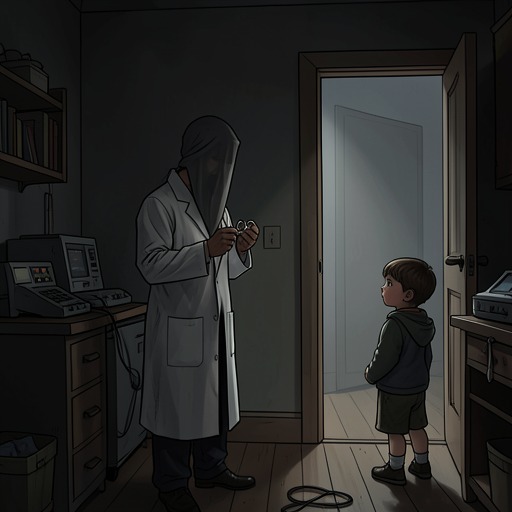
Andrew received a small box from Mrs. Lefay, who had entrusted it to him shortly before her death with instructions to burn it unopened and with certain ceremonies. He broke that promise. The box contained the secret that became the Rings, and Andrew treated his disobedience not as a breach of trust but as the privilege of a supposedly exceptional scholar, exempt from rules he considered fit for ordinary people.
Andrew’s account of the Rings is practical but only partly reliable. He says they work through contact with the skin: gloves let him handle them without triggering them, while a Ring in a pocket is safe unless its wearer touches it. He assigns the Yellow Rings to travel outward and the Green Rings to return home, placing two Green Rings in Digory’s right-hand pocket and urging him to wear a Yellow Ring on his finger. His color mnemonic—Green and right both beginning with G and R—makes the instructions sound orderly, but the proposed outward-and-homeward distinction is wrong.
Actual Operation and Interworld Travel
The Rings’ material explains the mismatch between Andrew’s theory and their effects. Both are made from substance that came from the Wood between the Worlds. The Yellow material longs to return to its own place, so touching a Yellow Ring draws its wearer into the Wood. The Green material is trying to leave that place; a Green Ring therefore takes its wearer out of the Wood and into a world. The Rings do not simply mark an outward journey and a homeward one: their effects depend on the relation between their material and the Wood.
Andrew has never visited the Wood and does not know this distinction. Digory and Polly discover it through failed attempts to use the Rings on the pools there. After a pool proves to be only a puddle, Digory assumes the Yellow Rings should have taken them outward, following Andrew’s explanation. The narrator clarifies that the children do not yet fully understand the truth either; they decide to try the Green Rings in a new pool, expecting little more than another splash. The episode makes the Rings’ power inseparable from the limits of the knowledge guiding their use.
Consequences and Ethical Limits
The Rings’ reach connects the children’s adventures to events with consequences far beyond a single journey. In Narnia, the Witch’s iron bar, torn from a London lamp-post, sinks into the ground and grows into a young lamp-post. That transformation belongs to the same world where the children witness the creation and awakening of living beings, including Aslan’s summons: “Narnia, Narnia, Narnia, awake. Love. Think. Speak. Be walking trees. Be talking beasts. Be divine waters.” The contrast between the Rings as Andrew’s proposed instruments of control and the world’s larger, living transformations highlights how little his technical confidence can account for.
The Rings also make possible Digory’s journey to the garden of silver apples. At its gold gates he reads the warning to take fruit for others or forbear, and he carries an apple back for Aslan rather than eating it himself. The Witch, who has tasted the fruit, tempts him to take one home to his ill mother and promises him life without death and rule over a world. Aslan later explains that even a stolen apple planted with good intentions would have made Narnia a strong, cruel empire like Charn; an apple taken to heal Digory’s mother would have healed her, but not to the lasting joy of either mother or son. The Rings enable access to these choices, but they do not settle how the power they unlock should be used.
Burial and Legacy
After the children return to London, Aslan orders them to take Andrew’s Rings and bury them so that no one can use them again. Polly retrieves them while wearing gloves, and Digory marks the place where he buried the apple core. They bury all the Rings in a circle around the growth already rising there. Their disposal is deliberate: the same children who used the Rings to cross between worlds ensure that the route cannot become another person’s instrument.
The buried Rings are distinct from the lasting material legacy of the apple tree. The tree that grows from Digory’s planted core bears exceptionally beautiful and healthful apples in England, but not fruit with the Narnian tree’s full restorative magic. Its timber nevertheless retains magic. When a storm later blows the tree down, the middle-aged Digory has part of it made into a wardrobe; someone else discovers that wardrobe’s properties, beginning later comings and goings between Narnia and the human world. The Rings’ passage is closed, but the consequences of the children’s interworld journey persist through a different object and a different material chain.